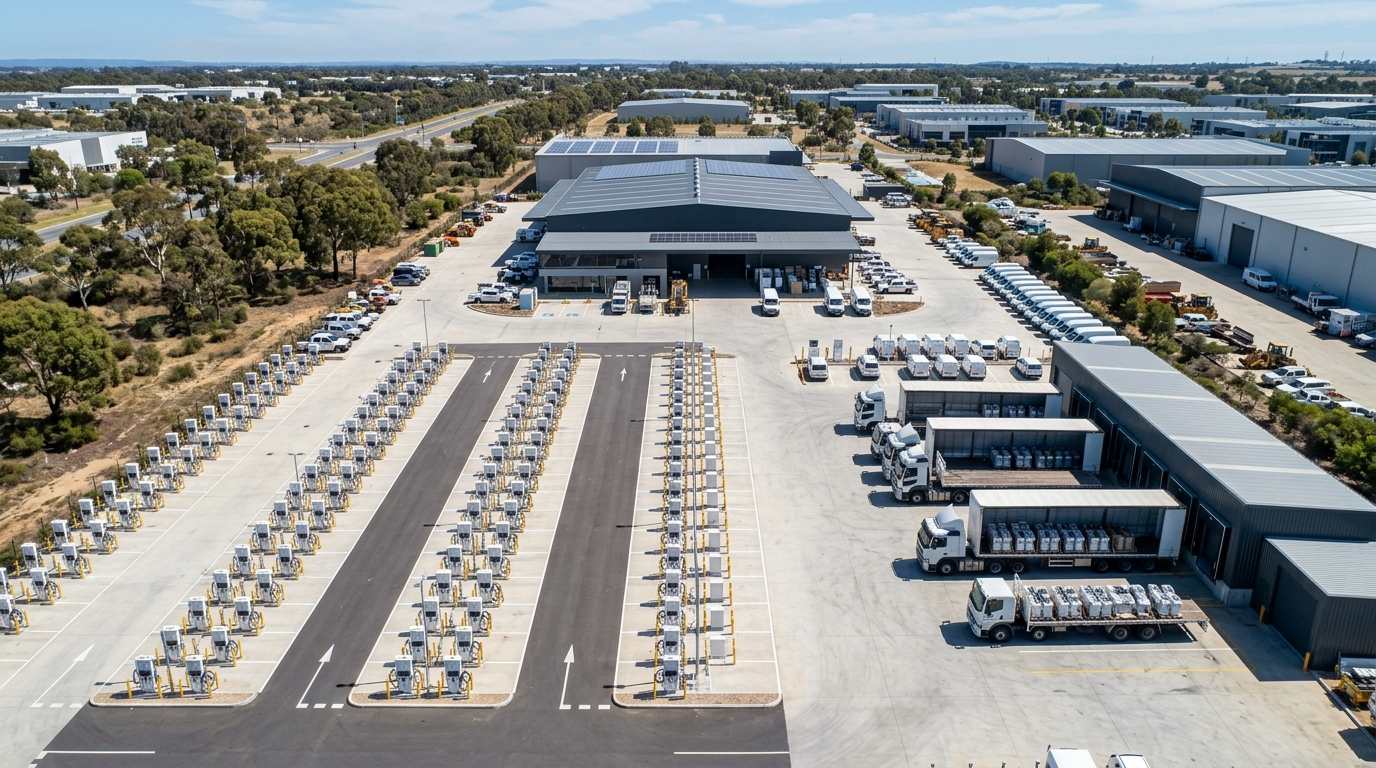
Quick Answer
EV charger finance involves securing funding for the acquisition and installation of electric vehicle charging infrastructure and related fleet electrification assets for Australian businesses. In 2026, finance options typically include chattel mortgages, commercial hire purchase, and equipment loans, with indicative rates ranging from 7-14% p.a. (indicative only) depending on business profile and lender. Major banks (CBA, NAB, Westpac) and specialist equipment financiers (Pepper, Lumi, Prospa) offer solutions for amounts from $10,000 to multi-million dollar projects. Modern comparison platforms can provide efficient assessment, with settlements possible within a few days to weeks for straightforward applications (subject to lender and circumstances). Finance can cover charging stations, installation, and energy management systems, with potential tax benefits.
| Business/Borrower Profile | Indicative Rate | Typical Term | Common Use/Equipment |
|---|---|---|---|
| Established (2+ years, strong financials) | 7-10% p.a. | 3-7 years | Large-scale fleet charging, DC fast chargers |
| Standard (1-2 years trading) | 10-13% p.a. | 3-5 years | Multiple AC chargers, depot infrastructure |
| Newer/Specialist Assets | 13-16%+ p.a. | 1-3 years | Initial charger rollout, complex installations |
Rates are indicative examples only. Actual rates depend on individual circumstances, lender assessment, and the specific EV charger finance solution chosen.
📄 Navigation Guide
- → The Drive Towards Electrification
- → Understanding EV Charger Finance
- → Eligibility Criteria
- → Indicative Rates and Terms
- → Tax Benefits & Incentives
- → Navigating the Lender Landscape
- → Example: Commercial Rollout
- → Streamlining Your Application
- → Frequently Asked Questions
- → Get EV Charger Finance
By the Loan Phone team · Reviewed by Anthony Moncada, M.App.Fin, Cert IV Finance & Mortgage Broking, Director
The Drive Towards Electrification: Why Finance Matters
Australian businesses are increasingly recognising the operational and environmental benefits of transitioning to electric vehicle (EV) fleets. From reducing fuel costs to enhancing corporate social responsibility, fleet electrification is a significant strategic move. However, the initial capital outlay for EVs and, crucially, the necessary charging infrastructure, can be substantial. This is where EV charger finance becomes essential, providing businesses with the means to acquire and install charging stations without depleting vital working capital. In 2026, the market for commercial EV charger funding is robust, offering tailored solutions to support this green transition.
Understanding EV Charger & Fleet Electrification Finance
EV charger finance is a specialised form of asset finance designed to fund the purchase and installation of electric vehicle charging stations and related infrastructure. This can range from single AC chargers for small businesses to extensive DC fast-charging networks for large commercial fleets or public access.
What Can Be Financed?
A wide range of assets related to fleet electrification can typically be financed:
1. EV Charging Stations Both AC (Level 2) and DC (Level 3/fast chargers) from brands like Tritium, Wallbox, Chargefox, and Evie Networks can be financed.
2. Installation Costs This includes electrical upgrades, trenching, wiring, and labour required for setting up the charging infrastructure.
3. Energy Management Systems Software and hardware solutions for optimising charging schedules and overall energy consumption.
4. Grid Connection Upgrades
Costs associated with increasing power supply to accommodate new charging loads for your fleet electrification project.
5. Associated Equipment Items such as battery storage solutions or solar integration for charging systems are often included.
6. Electric Vehicles Themselves Often financed alongside the charging infrastructure through commercial vehicle finance.
Common Finance Structures for EV Chargers
Australian businesses typically utilise several established finance structures for EV charger finance, each offering distinct benefits:
1. Chattel Mortgage This is a popular option where the business takes immediate ownership of the EV chargers, and the lender holds a mortgage over the equipment as security. Businesses can often claim the full GST input tax credit upfront and potentially depreciate the asset. Learn more about Chattel Mortgage Guide.
2. Commercial Hire Purchase (CHP) Under a CHP agreement, the lender purchases the EV chargers, and the business hires them over a set term. Ownership transfers to the business upon the final payment.
3. Finance Lease The lender purchases the EV chargers, which the business then leases. At the end of the lease term, the business typically has options to purchase the assets, re-lease them, or return them.
4. Equipment Loan A traditional loan where the business owns the equipment outright from the start, and the loan is secured against the equipment. This is a broad category under Equipment Finance Australia, detailing how equipment finance works.
Eligibility Criteria for EV Charger Finance
While criteria vary between lenders, most sustainable transport finance providers look for:
- Australian Business Number (ABN): Typically required for a minimum of 6-12 months, though some specialist lenders may consider newer businesses, especially with ABN loans.
- Trading History: Established businesses (2+ years) with strong financials generally secure the best rates. Newer businesses may still qualify but might face higher indicative rates or require stronger business plans.
- Financial Health: Lenders assess profitability, cash flow, and existing debt. Audited financials or recent bank statements are commonly requested.
- Credit History: A good business credit score is advantageous. However, specialist brokers can assist businesses with less-than-perfect credit by connecting them with non-bank lenders.
- Asset Use: The EV chargers must be primarily for business use (typically 51% or more).
Indicative Rates and Terms for EV Charging Infrastructure
In 2026, EV charger finance rates in Australia typically range from 7% p.a. (indicative only) for well-established businesses with strong financial positions to 14%+ p.a. (indicative only) for newer operators or those with complex requirements. These are indicative rates, and actual offers are subject to individual credit assessment, the specific lender, loan amount, and the term chosen.
- Loan Amounts: From $10,000 for a few AC chargers to multi-million dollar facilities for extensive fleet electrification projects.
- Loan Terms: Commonly range from 1 to 7 years, depending on the asset’s useful life and the business’s repayment capacity. Longer terms can reduce monthly repayments but may increase the total interest paid.
- Balloon Payments/Residuals: These can be structured into chattel mortgages or finance leases to reduce regular payments, with a lump sum due at the end of the term.
Tax Benefits and Government Incentives
Financing EV infrastructure can offer significant tax advantages for Australian businesses.
Important: Tax benefits depend entirely on your individual business structure, circumstances, and how you use the asset. The information below is general in nature only. Always seek independent advice from a qualified tax professional or accountant before making any financing decisions.
- Depreciation: EV chargers are typically considered depreciable assets. Businesses can claim depreciation deductions over the effective life of the asset, reducing taxable income. According to ATO guidelines, commercial charging infrastructure may have a useful life of 5-10 years. Learn more about equipment finance tax deductions.
- GST Input Tax Credits: For finance structures like chattel mortgages, businesses can generally claim the full GST input tax credit upfront, provided they are registered for GST.
- Government Incentives: While federal-level
EV charging grantsfor businesses may vary, state governments (e.g., NSW, VIC, QLD) often offer various grants, rebates, or low-interest loan programs to support the adoption of EVs and charging infrastructure. It’s crucial to check current state-specific programs as of 2026. This is often covered in a Sustainable Business Finance Guide.
Navigating the Lender Landscape
The market for green equipment finance in Australia includes a diverse range of lenders:
- Major Banks: Commonwealth Bank (CBA), National Australia Bank (NAB), Westpac, ANZ, and Macquarie Bank often offer competitive rates for established businesses with strong credit profiles. You can compare ANZ vs CBA equipment finance options through a broker.
- Specialist Equipment Financiers: Non-bank lenders like Pepper Money, Liberty Financial, Resimac, Selfco, and Azora specialise in equipment finance, often providing more flexible solutions for businesses that might not meet traditional bank criteria.
- FinTech Lenders: Innovators like Lumi and Prospa offer streamlined online applications and quicker approvals, particularly for smaller
EV charger fundingneeds.
Comparison platforms like Loan Phone simplify this process by providing access to over 100 lenders, allowing businesses to compare tailored EV infrastructure loans and find the best fit for their specific needs, often proving more effective than going direct to a bank.
Example: Financing a Commercial EV Charger Rollout
Scenario: Financing 10 AC Fast Chargers
| Cost of 10 chargers & installation (inc. GST) | $120,000 |
| Deposit | $0 |
| Amount Financed | $120,000 |
| Interest Rate (example) | 9.5% p.a. |
| Term | 5 years (60 months) |
| Indicative Monthly Repayment | ~$2,525 |
| Total Cost Over 5 Years | ~$151,500 |
This example is for illustrative purposes only. Actual rates, terms, and repayments depend on lender assessment, your individual circumstances, and current market conditions. Consult your accountant regarding tax implications.
Streamlining Your EV Charger Finance Application
Applying for electric vehicle charging finance through a modern comparison platform like Loan Phone offers significant advantages over traditional methods:
| Feature | Traditional Bank Application | Loan Phone Comparison Platform |
|---|---|---|
| Lender Access | Limited to one bank's offerings | Access to 100+ lenders, including banks & non-banks |
| Process Speed | Often lengthy, multiple forms, manual follow-ups | Streamlined online application, digital documents |
| Expertise | Generalist banker, may lack `EV finance` specialisation | Specialist brokers available for complex scenarios |
| Comparison | Manual, time-consuming research for best rates | Automated comparison of personalised options |
| Credit Impact | Multiple credit enquiries if applying to several banks | Single enquiry for comparison, no initial credit impact |
Although each lender has different timeframes and your circumstances will vary, our streamlined system allows you to get approved on an apples-for-apples basis much quicker than any other broker or direct bank option. This efficiency is crucial for businesses looking to rapidly scale their fleet electrification efforts.
Frequently Asked Questions
What types of EV charger finance are available in Australia? +
Businesses in Australia can typically access `EV charger finance` through chattel mortgages, commercial hire purchase, finance leases, and equipment loans. Each structure offers different benefits regarding ownership, GST treatment, and tax deductions.
What are the eligibility criteria for EV charger finance? +
Eligibility generally requires an active ABN (typically 6-12+ months), a sound business trading history, and healthy financials. Specific requirements can vary by lender, loan amount, and the type of `EV infrastructure` being financed.
Are there government grants or incentives for fleet electrification in Australia? +
Yes, while federal programs may fluctuate, various state governments across Australia often offer grants, rebates, or low-interest loan schemes to encourage `fleet electrification` and `EV charging infrastructure` development. It's advisable to check current state-specific initiatives as of 2026.
What are the tax implications of financing EV chargers? +
Financing `EV chargers` can offer tax benefits such as claiming GST input tax credits upfront (e.g., with a chattel mortgage) and depreciating the asset over its effective life, reducing your business's taxable income. Always consult a qualified accountant for advice tailored to your specific situation.
How quickly can I get finance for EV charging infrastructure? +
Initial credit decisions for straightforward `EV charger finance` applications may be provided within 24-48 hours. However, the complete settlement timeframe varies based on documentation execution, lender processing, and coordination with suppliers and installers.
Get EV Charger Finance for Your Business
Ready to explore EV charger finance options?
Loan Phone combines streamlined online comparison with specialist broker expertise to help your business transition to an electric future.
Fast Online Comparison - See personalised options from 100+ lenders
Specialist Support Available - Expert guidance when you need it for fleet electrification loans
Efficient Processing - Streamlined process with digital document handling
Free, No Credit Impact - Use our comparison tool with no effect on your credit score
Speak with Specialists
Need expert guidance on your EV charger finance application?
Email: loans@loanphone.com.au
Website: www.loanphone.com.au
Related Resources
Explore these related guides for business owners and ABN holders:
Disclaimer: This article provides general information only and should not be relied upon as financial or tax advice. Rates, terms, and eligibility vary by lender and individual circumstances. Tax benefits are subject to your specific business structure and circumstances. Always seek independent professional advice from a qualified accountant and financial adviser before making financing decisions.
Loan Phone www.loanphone.com.au | loans@loanphone.com.au
Compare Loans Now - No impact to your credit score
Last updated: 2026-08-25