Quick Answer
Loader finance in Australia provides businesses with chattel mortgages, commercial hire purchase, or equipment loans to acquire essential machinery like wheel loaders and skid steers. Rates typically range from 7-12% p.a. (indicative only) in 2026, with terms from 1 to 7 years. Businesses can access finance through major banks (CBA, NAB, Westpac), specialist equipment financiers, and non-bank lenders via modern comparison platforms like Loan Phone. Eligibility often requires a minimum 12-24 months trading history and a valid ABN, though specialist lenders may assist newer operators. Potential tax benefits include GST input tax credits and depreciation deductions (subject to individual circumstances and ATO guidelines).
| Business/Borrower Profile | Indicative Rate | Typical Term | Common Loader Type |
|---|---|---|---|
| Established (2+ years, strong financials) | 6.5-9% p.a. | 3-5 years | Wheel Loaders, Telehandlers |
| Standard (1-2 years trading) | 9-12% p.a. | 1-5 years | Skid Steers, Compact Track Loaders |
| Newer/Developing (less than 1 year) | 12-15%+ p.a. | 1-3 years | Mini Loaders, Used Skid Steers |
Rates are indicative examples only. Actual rates depend on individual circumstances, lender assessment, and the specific loader being financed.
📄 Navigation Guide
- → Loader Finance: Powering Australian Businesses
- → Understanding Loader Finance Options
- → Who Qualifies for Loader Finance?
- → How Much Does Loader Finance Cost?
- → The Loader Finance Application Process
- → Loader Finance for Specific Equipment
- → Frequently Asked Questions
- → Get Loader Finance for Your Business
By the Loan Phone team · Reviewed by Anthony Moncada, M.App.Fin, Cert IV Finance & Mortgage Broking, Director
Loader Finance: Powering Australian Businesses
Loader equipment, from robust wheel loaders to versatile skid steers and compact track loaders, forms the backbone of countless Australian industries. Construction companies, agricultural enterprises, waste management services, and landscaping businesses rely on these machines for heavy lifting, earthmoving, and material handling. Acquiring these essential assets, however, often represents a significant capital outlay. This is where specialised loader finance solutions become crucial, enabling businesses to access the equipment they need without depleting working capital.
Loader finance provides a structured way for businesses across Australia to purchase or lease new and used equipment, spreading the cost over its useful life. This approach helps maintain cash flow, preserve credit lines, and can offer significant tax advantages depending on the finance structure chosen. Understanding the various options available and how to navigate the lending landscape is key to making an informed decision for your business. For a broader overview of options, see our comprehensive guide on equipment finance.
Understanding Loader Finance Options
In Australia, several finance structures are commonly used for acquiring loaders, each with distinct features and tax implications.
Chattel Mortgage for Loaders
A chattel mortgage is a popular finance option for Australian businesses. Under this structure, your business takes immediate ownership of the loader upon purchase, while the lender holds a ‘mortgage’ or security over the equipment until the loan is fully repaid. This structure allows businesses to claim the full GST input tax credit upfront (if registered for GST) and depreciate the asset over its effective life. Repayments are typically fixed, and a balloon payment can be structured at the end of the term to reduce monthly outgoings. Learn more about the intricacies in our Chattel Mortgage Australia Guide.
Commercial Hire Purchase (CHP)
With Commercial Hire Purchase (CHP), the lender purchases the loader on behalf of your business, then ‘hires’ it to you over a set term. While you have full use of the equipment, legal ownership only transfers to your business once the final payment (and any residual value) is made. GST is typically paid on the purchase price by the financier and passed on in repayments or a residual value. Businesses can claim depreciation and interest paid as tax deductions. For a deeper dive into this option, explore our comparison of Hire Purchase vs. Chattel Mortgage.
Finance Lease
A finance lease allows your business to use the loader for a fixed period by making regular lease payments, without outright ownership. The lender retains ownership throughout the lease term. At the end of the term, your business typically has options to purchase the loader for its residual value, return it, or re-lease it. Lease payments are generally tax-deductible. This option is often considered for equipment that may quickly become obsolete or when businesses prefer to upgrade regularly.
Who Qualifies for Loader Finance?
Eligibility for loader finance in Australia varies significantly among lenders, but general guidelines apply. Most traditional lenders, including major banks like Commonwealth Bank (CBA) and NAB, typically look for:
- Valid ABN: An active Australian Business Number. Access more information on ABN holder loans.
- Trading History: Minimum 12-24 months of trading history is often preferred, particularly for larger loan amounts. Newer businesses or those with limited trading history may still qualify through specialist lenders, though rates might be higher.
- Financial Health: Demonstrated ability to service the loan, usually assessed through recent financial statements, bank statements, and business activity statements (BAS).
- Good Credit History: A positive credit score for the business and its directors. However, don’t be discouraged by past credit challenges; specialist brokers can often find solutions. Learn more about low-doc business equipment loans if you have limited financials.
- Asset Type: The loader’s age, condition, and intended business use are also assessed.
It’s important to remember that these are guidelines only, and individual circumstances are always considered. Specialist asset finance providers and non-bank lenders often have more flexible criteria, particularly for unique business situations or specific asset types.
How Much Does Loader Finance Cost?
The cost of loader finance is primarily influenced by the interest rate, loan term, and any fees. In 2026, indicative loader finance rates in Australia typically range from 6.5% p.a. for well-established businesses with strong financials, up to 15%+ p.a. for newer operators or those with more complex credit profiles.
| Indicative Loader Finance Rates (2026) | |
|---|---|
| **Business Profile** | **Indicative Rate Range (p.a.)** |
| Established (2+ years, strong financials) | 6.5% - 9% |
| Standard (1-2 years trading) | 9% - 12% |
| Newer/Developing (less than 1 year) | 12% - 15%+ |
Rates are indicative examples only and are subject to change without notice. Actual rates depend on individual circumstances, lender assessment, and current market conditions.
The total cost over the loan term will depend on these factors. A longer loan term typically results in lower monthly repayments but increases the total interest paid over the life of the loan. Conversely, a shorter term means higher monthly repayments but less overall interest. Balloon payments can also affect monthly costs. To understand specific repayment structures, a balloon payment equipment finance guide can be helpful.
The Loader Finance Application Process
The application process for loader finance can vary depending on the lender and the complexity of your business’s situation. However, modern comparison platforms like Loan Phone have significantly streamlined the experience.
Traditional vs. Streamlined Application:
- Traditional Bank: Often involves multiple forms, lengthy waits for credit assessment, and direct negotiation with a single lender. Timeframes can extend to weeks.
- Loan Phone Platform: Our streamlined system allows you to submit a single application to access options from over 100 lenders simultaneously. Initial credit decisions for straightforward applications may be provided within 24-48 hours. Our specialist brokers can guide you through the documentation, helping you get approved on an apples-for-apples basis much quicker. For insights into working with a broker, review why use a finance broker.
Typically, you’ll need to provide:
- Your ABN and business registration details.
- Details of the loader you intend to finance (new or used, make, model, price).
- Financial statements (for established businesses).
- Bank statements.
- Identification for directors.
Loader Finance for Specific Equipment
Whether you’re looking for heavy-duty construction machinery or versatile compact equipment, finance solutions are tailored to the asset.
Wheel Loader Finance
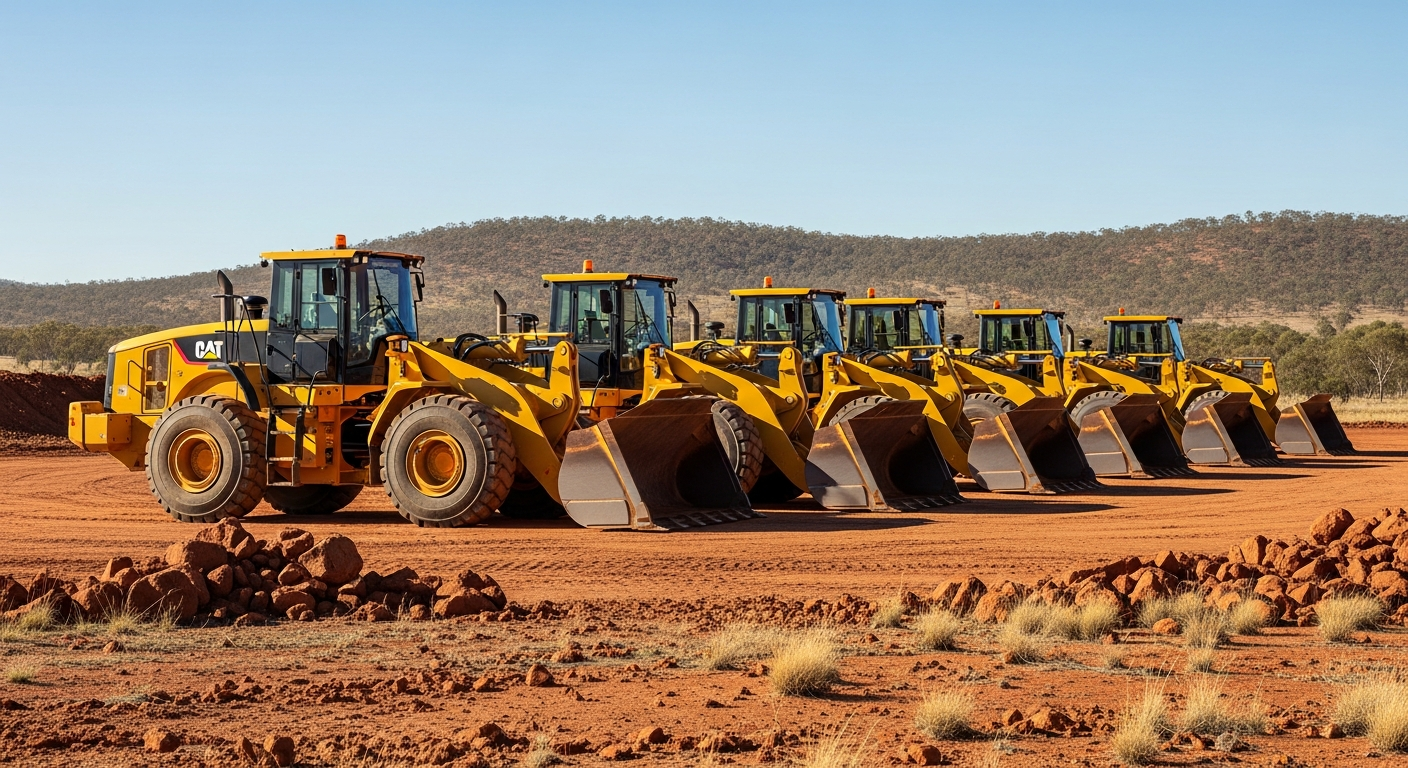
Wheel loaders are large, powerful machines essential for moving bulk materials, loading trucks, and general earthmoving on construction sites, quarries, and mines. Financing a new or used wheel loader, such as a Caterpillar 926M or a Komatsu WA270, often involves larger loan amounts and longer terms due to their significant investment cost and long operational life. Lenders assess the asset’s value, your business’s capacity for higher repayments, and its intended heavy-duty use. For similar heavy equipment, consider reading about truck and semi-trailer finance.
Skid Steer Finance
Skid steers are compact, agile machines known for their versatility in tight spaces. They are popular in landscaping, agriculture, and smaller construction projects. Financing a Bobcat S70 or a Kubota SVL75, for instance, typically involves smaller loan amounts compared to wheel loaders, with terms ranging from 1 to 5 years. Lenders focus on the business’s cash flow and the asset’s broad utility. If you’re looking for Bobcat-specific finance, we have a dedicated guide on Bobcat equipment finance Australia.
Compact Track Loader Finance
Similar to skid steers but with tracks instead of wheels, compact track loaders (CTLs) offer superior traction and stability on uneven or soft terrain. Brands like JCB and John Deere produce popular CTL models. Finance for these machines follows similar principles to skid steers, with considerations for their specific applications in challenging environments. The principles here can also apply to earthmoving equipment finance more broadly.
Frequently Asked Questions
How does loader finance work in Australia? +
Loader finance allows Australian businesses to acquire essential equipment like wheel loaders and skid steers through various loan structures such as chattel mortgages, commercial hire purchase, or finance leases. This spreads the cost over time, helping to preserve working capital and offering potential tax benefits.
What are typical interest rates for loader finance? +
Indicative loader finance rates in Australia for 2026 typically range from 6.5% p.a. for established businesses to 15%+ p.a. for newer or higher-risk profiles. Actual rates depend on your business's age, financial strength, and the specific loader being financed.
Can I finance a used loader? +
Yes, businesses can finance both new and used loaders. Lenders will assess the used loader's age, condition, and valuation. Older equipment may have shorter loan terms or require a higher deposit. For further details, consider guides on low-doc equipment finance for flexible options.
What documents do I need for loader finance? +
Typically, you'll need your ABN, business registration details, details of the loader, recent financial statements (if applicable), bank statements, and identification for directors. Specialist brokers can help streamline this process, especially for self-employed business loans.
Can I get loader finance with a new ABN? +
While most traditional lenders prefer a minimum of 12-24 months trading history, specialist equipment financiers and non-bank lenders may consider applications from businesses with a new ABN. These options often come with higher interest rates and potentially shorter terms. Explore specific ABN finance options for new businesses.
Get Loader Finance for Your Business
Ready to explore loader finance options for your wheel loader, skid steer, or compact track loader?
Loan Phone combines streamlined online comparison with specialist broker expertise.
Fast Online Comparison - See personalised options from 100+ lenders
Specialist Support Available - Expert guidance when you need it
Efficient Processing - Streamlined process with digital document handling
Free, No Credit Impact - Use our comparison tool with no effect on your credit score
Related Resources
Explore these related guides for business owners and ABN holders:
Disclaimer: This article provides general information only and should not be relied upon as financial or tax advice. Rates, terms, and eligibility vary by lender and individual circumstances. Tax benefits are subject to your specific business structure and circumstances. Always seek independent professional advice from a qualified accountant and financial adviser before making financing decisions.
Loan Phone www.loanphone.com.au | loans@loanphone.com.au
Compare Loans Now - No impact to your credit score
Last updated: 2026-02-10