Quick Answer
Ag equipment finance provides Australian farmers and agricultural businesses with funding solutions to acquire essential farm machinery and vehicles. This typically involves secured loan structures like chattel mortgages, commercial hire purchase, or finance leases, where the equipment itself acts as security. In 2025, indicative rates often range from 6.5% to 12%+ p.a. (indicative only) depending on the business’s financial strength, trading history, and the asset type. Loan amounts can stretch from $10,000 up to $5 million or more, with terms typically between 1 and 7 year terms. Farmers can access these options through major banks (CBA, NAB, Westpac), specialist rural lenders, and non-bank financiers, often facilitated efficiently by modern comparison platforms like Loan Phone. Potential tax benefits, such as depreciation and GST input tax credits, are available, subject to individual circumstances and ATO guidelines.
| Business/Borrower Profile | Indicative Rate Range (p.a.) | Typical Term | Common Equipment Financed |
|---|---|---|---|
| Established (2+ years, strong financials) | 6.5 - 9% | 3-7 years | New tractors, harvesters, large-scale irrigation |
| Standard (1-2 years trading, good financials) | 9 - 11.5% | 3-5 years | Used tractors, utility vehicles, smaller farm machinery |
| Developing/Newer (less than 1 year, specific scenarios) | 11.5 - 14%+ | 1-3 years | Essential starter equipment, smaller implements |
Rates are indicative examples only. Actual rates depend on individual circumstances and lender assessment.
📄 Navigation Guide
By the Loan Phone team · Reviewed by Anthony Moncada, M.App.Fin, Cert IV Finance & Mortgage Broking, Director
1. Introduction: Powering Australian Agriculture
For Australian farmers, agricultural equipment isn’t just a tool; it’s the backbone of their operations. From tractors tilling vast fields to harvesters bringing in vital crops and irrigation systems ensuring productivity, modern farm machinery is a significant investment. Acquiring this essential equipment often requires substantial capital, making ag equipment finance a critical component of successful farm management.
In 2025, the Australian agricultural sector continues to navigate dynamic market conditions, making strategic financing more important than ever. Whether you’re upgrading an aging fleet, expanding your operations with new technology, or replacing a vital piece of machinery, understanding your funding options is key to maintaining efficiency and profitability. This guide will walk you through the various types of farm machinery finance available, eligibility requirements, potential tax benefits, and how to secure the best deal for your agricultural business. Learn more about equipment finance options for your business.
2. What is Ag Equipment Finance?
Ag equipment finance, also known as farm machinery finance or agricultural loans, refers to tailored funding solutions designed specifically for businesses in the agriculture sector to acquire new or used equipment. Instead of paying the full purchase price upfront, which can tie up significant working capital, businesses can finance the equipment over a set period.
This type of finance typically involves a secured loan where the farm machinery itself acts as collateral. This security reduces the lender’s risk, often resulting in more competitive interest rates and flexible terms compared to unsecured business loans. The core benefit is that it allows farmers to acquire the necessary equipment to generate income without depleting cash reserves, improving cash flow management and enabling growth. For general insights into financing assets, our asset finance guide is helpful.
3. Key Types of Ag Equipment Finance
Understanding the different finance structures is crucial, as each offers distinct advantages regarding ownership, balance sheet treatment, and tax implications. The most common options for ag equipment finance in Australia include chattel mortgages, commercial hire purchase, finance leases, and, less commonly, operating leases.
Chattel Mortgage
A chattel mortgage is a popular finance option for Australian businesses, including those in agriculture, because it allows for immediate ownership of the asset. The lender takes a “mortgage” over the equipment (the chattel) as security, but the business holds the title from day one.
Key Features:
- Ownership: You own the equipment from purchase.
- Security: The lender registers a security interest over the equipment.
- GST: If you are registered for GST, you can typically claim the full GST on the purchase price upfront in your next Business Activity Statement (BAS).
- Tax: Interest and depreciation on the asset are generally tax-deductible (seek professional tax advice).
- Balloon Payment: Optional residual value (balloon payment) at the end of the term can reduce monthly repayments.
A chattel mortgage is often favoured by businesses looking to benefit from immediate ownership and upfront GST claims. Learn more about Chattel Mortgage Guide for comprehensive details. You can also compare current chattel mortgage rates for a better idea of costs.
Commercial Hire Purchase (CHP)
Under a Commercial Hire Purchase (CHP) agreement, the lender purchases the equipment on your behalf, and you hire it from them over a fixed period. You gain full ownership only after the final payment (and any optional balloon payment) has been made.
Key Features:
- Ownership: The lender owns the equipment during the term, with ownership transferring to you at the end.
- Security: The lender retains title until all payments are made.
- GST: GST is typically paid on the repayments and any residual value, rather than upfront on the full purchase price.
- Tax: Interest and depreciation are generally tax-deductible (seek professional tax advice).
- Balloon Payment: Optional residual value at the end of the term.
CHP can be a good option for businesses that prefer to spread out their GST claims over the life of the loan. Explore the specifics of Commercial Hire Purchase for a deeper understanding.
Finance Lease
A finance lease is essentially a rental agreement where the lender (lessor) purchases the equipment and leases it to your business (lessee) for a fixed term. At the end of the lease, you usually have options to purchase the equipment for a residual value, re-lease it, or return it.
Key Features:
- Ownership: The lender retains ownership throughout the lease term.
- Security: The equipment remains the property of the lessor.
- GST: GST is typically included in each lease payment.
- Tax: Lease payments are generally tax-deductible (seek professional tax advice).
- Residual Value: A mandatory residual value is set at the start, reflecting the equipment’s expected value at the end of the term.
Finance leases are often chosen by businesses that want to keep assets off their balance sheet or prefer the flexibility of not owning the equipment outright immediately. For more information, refer to our guide on Chattel Mortgage vs. Lease.
Operating Lease
An operating lease is a true rental agreement, typically for shorter terms, where the equipment is returned to the lessor at the end of the agreement. It’s often used for equipment that depreciates quickly or needs frequent upgrades. While less common for core farm machinery like tractors, it can be suitable for certain specialist, high-tech, or short-term use equipment.
Key Features:
- Ownership: The lender retains ownership.
- Security: No security interest is registered against your business.
- GST: GST is included in each rental payment.
- Tax: Rental payments are generally tax-deductible operating expenses.
- Residual Value: No residual value; the equipment is returned.
4. What Farm Machinery Can You Finance?
The range of agricultural equipment eligible for finance is vast, covering almost any asset that contributes to a farm’s operation. Lenders understand the diverse needs of the Australian agricultural sector.
Tractors and Cultivation Equipment
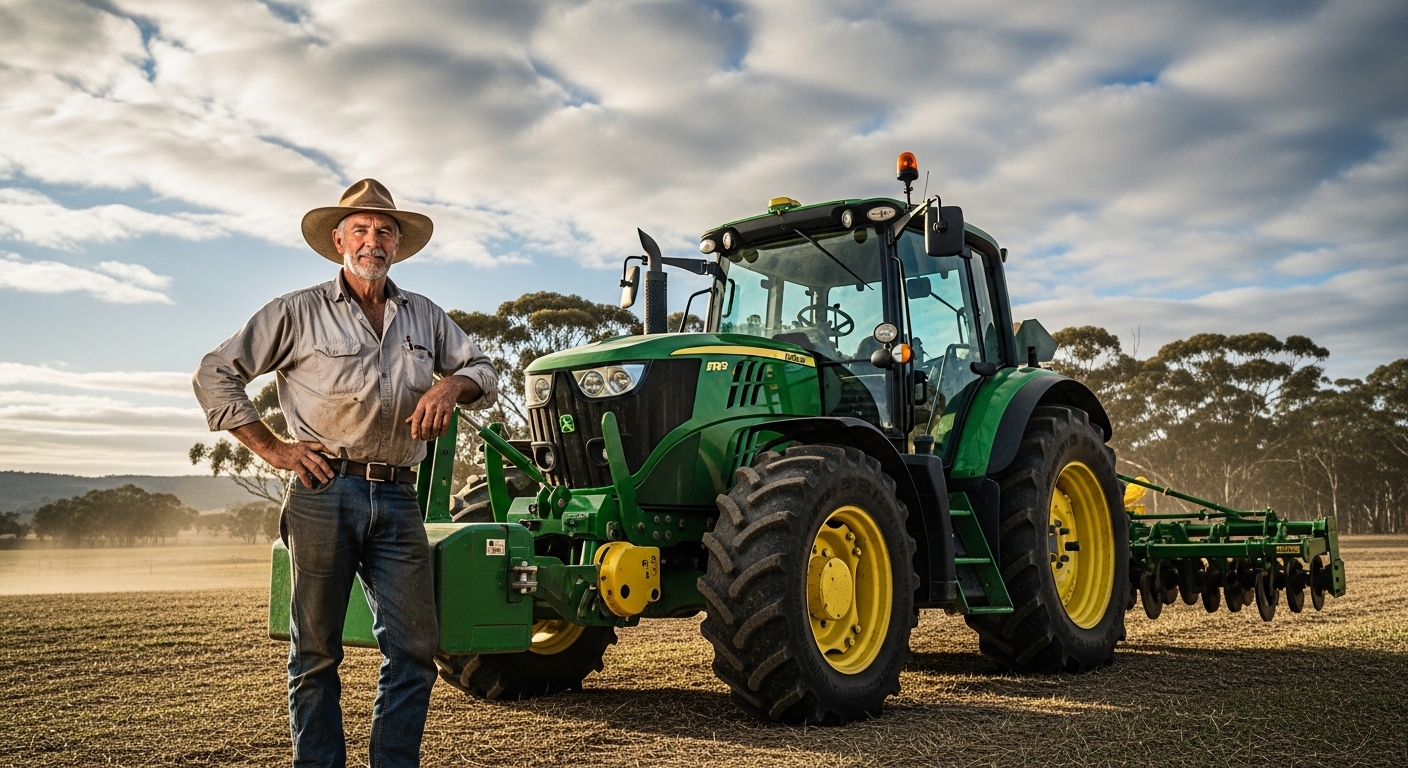
This includes everything from compact utility tractors to large-scale articulated tractors, ploughs, cultivators, seeders, and sprayers. New or used, these are often the most common items financed.
Harvesters and Headers
Combines, headers, cotton pickers, and grape harvesters are essential for crop production and represent significant investments that are regularly financed.
Irrigation Systems
Pivots, lateral moves, pumps, and associated infrastructure for efficient water management are critical for many farms and are fully financeable.
Utility Vehicles and Trucks
Farm utes, ATVs, rigid trucks, and even semi-trailers used for transporting produce or livestock can be financed. Our guide on Truck Finance Australia provides specific insights into commercial vehicle funding. Also consider options for commercial vehicle finance.
Dairy and Livestock Equipment
Milking machines, feed mixers, livestock trailers, fencing equipment, and animal handling systems are all eligible for agricultural loans.
Other Specialist Ag Equipment
This category includes forestry equipment, aquaculture machinery, viticulture equipment, drones for precision agriculture, and any other specialised tools vital to your specific farming operation. Generally, if it’s for business use and has a resale value, it can be financed. For specific equipment types, explore our guides on earthmoving equipment finance or machinery finance options.
5. Eligibility Criteria for Ag Equipment Finance
While specific requirements vary between lenders, there are general guidelines for qualifying for ag equipment finance. Specialist brokers often have access to lenders with more flexible criteria for unique farm scenarios.
Business Trading History
- Established Businesses (2+ years): Typically have the widest range of options and most competitive rates. Lenders look for consistent trading and financial performance.
- Newer Businesses (under 2 years): May still qualify, often through specialist lenders or with a stronger deposit. Some lenders offer specific programs for new ventures.
- Start-ups: Can be more challenging but not impossible. A strong business plan, relevant experience, and clear financial projections are crucial. To understand eligibility better, consider factors discussed in our guide for self-employed businesses.
Financial Health
Lenders assess your business’s ability to repay the loan. This typically involves reviewing:
- Bank Statements: Usually 6-12 months of business bank statements.
- Financials: Recent Profit & Loss statements and Balance Sheets (especially for loans over $150,000-$250,000).
- ATO Portal Access: Some lenders may request access to verify tax compliance.
- Debt Servicing Capacity: An assessment of your current income vs. existing debts.
For businesses with less extensive documentation, low-doc options may be available. Read our guide on Low-Doc Business Loans for more details.
Credit History
Both the business’s and the directors’ personal credit histories are typically reviewed. A strong credit score indicates responsible financial management and can lead to better rates. However, don’t be deterred by past credit issues; specialist lenders can often assist with less-than-perfect credit profiles. If you’re unsure about your credit score, get in touch – we can help you find out. Reviewing your credit score can be beneficial.
Asset Type and Age
The type, age, and condition of the farm machinery being financed also play a role.
- New Equipment: Generally easier to finance with lower rates.
- Used Equipment: Most lenders finance used equipment, but age restrictions (e.g., typically up to 10-15 years old by the end of the loan term) and valuation requirements may apply. The equipment must generally be in good working order and have a clear market value.
Eligibility criteria may vary by industry, loan amount, and asset type. It’s always best to speak with specialist brokers if you are unsure about your specific circumstances.
6. Indicative Rates, Fees, and Loan Terms
Understanding the potential costs associated with ag equipment finance is essential for budgeting and making informed decisions.
Understanding Interest Rates
As of October 2025, indicative interest rates for agricultural equipment finance in Australia typically range from 6.5% p.a. to 14%+ p.a. (indicative only), depending on various factors:
- Business Profile: Established businesses with strong financials (2+ years trading, good credit, consistent income) can often secure rates at the lower end (6.5-9% p.a.). Newer businesses or those with complex scenarios may face higher rates (10-14%+ p.a.).
- Lender Type: Major banks (CBA, NAB, Westpac) often offer competitive rates to their prime clients, while specialist equipment financiers and non-bank lenders provide options for a broader range of profiles, sometimes at slightly higher rates reflecting increased risk or flexibility. For instance, explore ANZ Asset Finance or Commonwealth Bank Asset Finance for bank-specific options.
- Loan Amount & Term: Larger loans over longer terms can sometimes attract slightly lower rates, but this is not always the case.
- Asset Type: Certain high-value, easily re-sellable assets might attract better rates.
| Borrower Profile | Indicative Rate Range | Loan Amount | Term |
|---|---|---|---|
| Strong (2+ years, good financials) | 6.5-8.5% p.a. | $10K-$5M+ | 1-7 years |
| Standard (1-2 years trading) | 8.5-10.5% p.a. | $10K-$2M | 1-5 years |
| Developing or specialist assets | 10.5-14%+ p.a. | $10K-$500K | 1-3 years |
Rates are indicative examples only. Actual rates depend on individual circumstances, lender assessment, and current market conditions. Rates are not published publicly and require individual quoting.
Typical Loan Terms
Loan terms for agricultural equipment finance typically range from 1 to 7 years. The optimal term depends on:
- Asset’s Useful Life: It’s generally advisable to match the loan term to the expected economic life of the equipment.
- Cash Flow: Longer terms result in lower monthly repayments but higher total interest paid. Shorter terms mean higher repayments but less overall interest.
- Balloon Payments: Utilising a balloon payment (residual value) can reduce monthly repayments, making longer terms more manageable.
Additional Fees
Beyond interest rates, consider potential fees:
- Establishment Fees: A one-off fee charged at the start of the loan.
- Service Fees: Ongoing monthly or annual fees.
- Documentation Fees: For processing paperwork.
- Early Repayment Fees: May apply if you pay off the loan before the scheduled term (less common with chattel mortgages, more so with leases).
Always request a comprehensive breakdown of all fees and charges before committing to any finance agreement. Consider refinancing options with our equipment refinancing guide.
7. Tax Benefits of Financing Farm Equipment
Financing farm equipment can offer significant tax advantages for Australian agricultural businesses. However, tax benefits depend entirely on your individual business structure, circumstances, and how you use the asset. The information below is general in nature only. Always seek independent advice from a qualified tax professional or accountant before making any financing decisions.
Depreciation
With finance structures like a chattel mortgage or commercial hire purchase (where you eventually own the asset), you can generally claim the depreciation of the equipment as a tax deduction. Depreciation allows you to deduct the decline in value of an asset over its effective life. According to ATO guidelines, commercial vehicles and farm machinery can typically be depreciated over 5-8 years (indicative only), depending on usage intensity and specific asset type. This reduces your taxable income over several years.
GST Input Tax Credits
- Chattel Mortgage: If you are registered for GST, you can typically claim the full GST component of the equipment purchase price in your next BAS, providing an immediate cash flow benefit.
- Commercial Hire Purchase & Finance Lease: With these structures, you generally claim the GST component on each repayment or lease payment over the term of the agreement.
Instant Asset Write-Off (Where Applicable)
The Instant Asset Write-Off scheme, when available (it has been subject to changes and specific thresholds in recent years), allows eligible businesses to immediately deduct the full cost of new or second-hand assets purchased and first used or installed ready for use. This can significantly reduce taxable income in the year of purchase. Always check the current ATO rules and eligibility criteria for the Instant Asset Write-Off as they can change. Discover how business asset finance can boost your operations.
8. The Ag Equipment Finance Application Process
Securing ag equipment finance can vary in complexity depending on whether you go directly to a traditional bank or utilise a modern comparison platform with specialist broker support.
Traditional Bank Application
- Initial Inquiry: Contact your bank relationship manager.
- Documentation Request: Banks typically require extensive documentation, including detailed financial statements, tax returns, business activity statements, and potentially a comprehensive business plan.
- Credit Assessment: A lengthy internal assessment process by the bank’s credit department.
- Negotiation: Limited ability to negotiate terms, as you’re only dealing with one lender.
- Timeframe: Can be slow, often taking weeks or even months for approval and settlement, especially for larger or more complex loans.
Streamlined with a Comparison Platform (Loan Phone)
Modern comparison platforms like Loan Phone simplify the process, offering efficiency and access to a wider range of options.
1. Online Comparison: Visit loanphone.com.au to input your basic business and equipment details.
2. Personalised Options: The platform quickly provides personalised indicative options from 100+ lenders, including major banks, specialist rural lenders, and non-bank financiers. This allows you to compare chattel mortgage, hire purchase, and lease options simultaneously. Many lenders also offer ABN loans tailored for businesses.
3. Specialist Broker Support: If your scenario is complex, or you need expert guidance, Loan Phone’s specialist brokers are available. They can assist with documentation, navigate eligibility criteria, and negotiate on your behalf to secure the best possible terms.
4. Efficient Processing: Although each lender has different timeframes and your circumstances will vary, our streamlined system allows you to get approved on an apples-for-apples basis much quicker than any other broker or direct bank option. Initial credit decisions for straightforward applications may be provided within 24-48 hours.
5. Digital Document Handling: Streamlined process with digital document handling reduces paperwork and speeds up the application.
This approach combines technology-driven efficiency with human expertise, making it ideal for Australian farmers seeking fast, competitive, and tailored farm machinery finance.
9. Choosing the Right Finance Partner
Selecting the right partner for your ag equipment finance is as crucial as choosing the right machinery. A good finance partner offers more than just a loan; they provide expertise, access to options, and efficient service.
Loan Phone stands out by combining streamlined online comparison with specialist broker expertise. Our platform gives you access to rates and options that may not be available by going direct to individual banks. We specialise in “left-of-centre” solutions, meaning if anybody can get a deal over the line on something tricky, our team can. We understand the unique challenges and opportunities within Australian agriculture and are committed to helping business owners make informed financing decisions. Our article on agricultural machinery finance provides further specific details. Considering a new vehicle? Check out the 2026 Toyota Hilux Finance Australia guide. Or perhaps you need manufacturing equipment finance for value-adding processes.
10. Frequently Asked Questions
What is the typical interest rate for ag equipment finance in Australia? +
Ag equipment finance rates in Australia typically range from 6.5% p.a. for established businesses with strong financials to 14%+ p.a. for newer operators or complex scenarios, as of 2025. Actual rates depend on your business age, financial strength, industry sector, and the asset type being financed. See Indicative Rates, Fees, and Loan Terms for more details.
Can I finance used farm machinery? +
Yes, businesses can finance both new and used farm machinery through chattel mortgages, commercial hire purchase, or equipment loans. Lenders consider the age, condition, and resale value of used equipment, with age restrictions (typically 10-15 years maximum age by end of term) often applying.
What are the tax benefits of a chattel mortgage for farm equipment? +
A chattel mortgage typically allows registered GST businesses to claim the full GST on the purchase price upfront and deduct interest charges and depreciation. However, tax benefits depend entirely on your individual business structure and circumstances. Always seek independent advice from a qualified tax professional or accountant. For more information, see Tax Benefits of Financing Farm Equipment.
How long does it take to get approved for farm equipment finance? +
Initial credit decisions for straightforward applications may be provided within 24-48 hours, though this refers to the approval decision itself. Complete settlement timeframes vary based on documentation execution speed, vendor coordination, and lender. Streamlined platforms can significantly accelerate the process.
Do I need a deposit for ag equipment finance? +
Many lenders offer 100% finance options, meaning a deposit may not be required. However, providing a deposit can reduce your loan amount, lower repayments, and potentially secure a better interest rate, especially for newer businesses or higher-risk assets.
Can Loan Phone help with finance for unique or specialist farm equipment? +
Yes, Loan Phone has access to 100+ lenders, including specialist equipment financiers who understand the unique requirements of various agricultural sectors. Our brokers are experienced in securing finance for "left-of-centre" or complex scenarios. Compare your options now at loanphone.com.au.
What documentation is usually required? +
Typically, lenders will request 6-12 months of business bank statements. For larger loans (over $150,000-$250,000), recent Profit & Loss statements and Balance Sheets may also be required. The aim is to make the process as simple and streamlined as possible.
What happens at the end of a finance lease for farm equipment? +
At the end of a finance lease, you typically have options to purchase the equipment for an agreed residual value, re-lease it for a further term, or return it to the lender. The specific options will be outlined in your lease agreement.
11. Get Ag Equipment Finance for Your Business
Ready to explore ag equipment finance options? For a comprehensive overview, review our main Equipment Finance Australia guide.
Loan Phone combines streamlined online comparison with specialist broker expertise, ensuring you find the right funding solution for your farm machinery needs.
Fast Online Comparison - See personalised options from 100+ lenders
Specialist Support Available - Expert guidance when you need it
Efficient Processing - Streamlined process with digital document handling
Free, No Credit Impact - Use our comparison tool with no effect on your credit score
Speak with Specialists
Need expert guidance on your agricultural equipment finance application? Email: loans@loanphone.com.au Website: www.loanphone.com.au
Related Resources
Explore these related guides for business owners and ABN holders:
Disclaimer: This article provides general information only and should not be relied upon as financial or tax advice. Rates, terms, and eligibility vary by lender and individual circumstances. Tax benefits are subject to your specific business structure and circumstances. Always seek independent professional advice from a qualified accountant and financial adviser before making financing decisions.
Loan Phone www.loanphone.com.au | loans@loanphone.com.au
Compare Loans Now - No impact to your credit score
Last updated: 2025-10-17